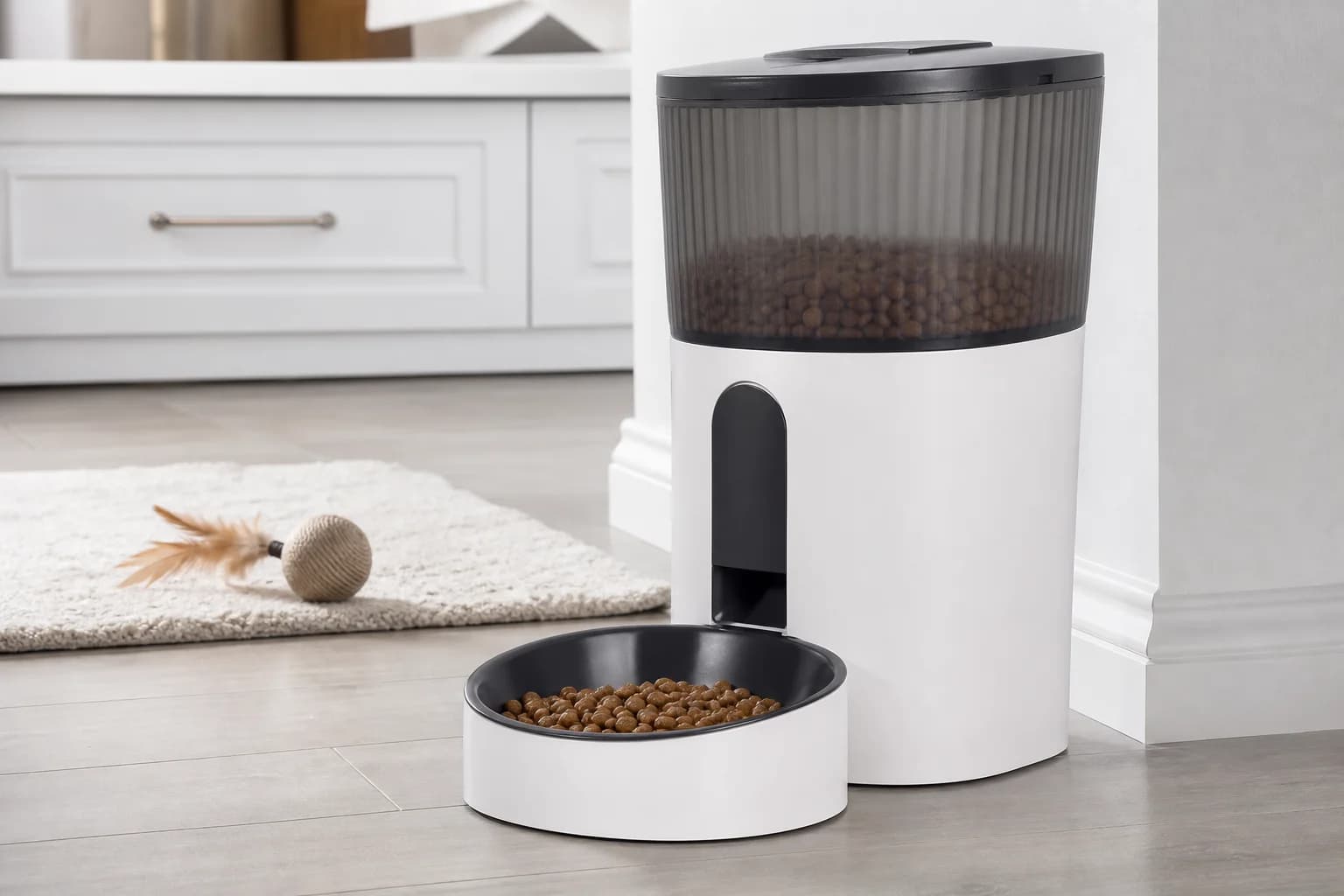
Do not replace bowl hygiene with a weekly feeder job
FDA guidance calls for washing pet-food bowls and measuring utensils with soap and hot water after each use. That food-contact hygiene task is separate from the maker's procedure for disassembling an automatic feeder. Follow the feeder instructions for which parts can be washed and how. Wet food, visible residue, odour, contamination, or a spill changes what needs attention; a calendar reminder is not a reason to leave a dirty food-contact surface in service.
Identify the model and the powered parts first
Read the model label and open its cleaning instructions before taking it apart. Empty the tank, disconnect power and handle any backup batteries as the manual directs. Place the electronics away from the sink. The term tank base can describe a removable part, while feeder base describes the powered body, so match the diagram instead of deciding by the word base. A camera, motor, RFID reader, or powered lid is not washable merely because the bowl is removable.
Use the model's removal sequence
The Granary AF103 guide gives a specific order for removing the lid, desiccant, tank, tank base, bowl and tray. Keep the parts together and avoid forcing a latch or rotating the powered body. Use the AF301 instructions for an RFID feeder rather than copying the Granary sequence. Remove old food and residue from permitted food-contact parts before cleaning them. If the maker gives no approval for a dishwasher or particular chemical, do not infer it from stainless steel or plastic construction alone.
Dry before refilling, including hidden surfaces
Both PETLIBRO cleaning pages require the accessories to be completely dry before assembly. Check recesses, seams and the food path rather than relying only on a dry outer surface. Keep washed parts apart until ready to assemble, and do not use new kibble to absorb leftover moisture. Inspect the desiccant and replace it according to the exact model's instructions; do not wash it with the tank. If moisture reached a prohibited electronic part, stop and ask the manufacturer what to do before reconnecting power.
Check operation while you can still intervene
After permitted reassembly, check that the tank, bowl and lid are seated, then reconnect power as instructed. Verify the clock, schedule, app connection and backup-power state rather than assuming they survived the cleaning session. Run a normal dispense while you are present and inspect the outlet and delivered portion. For an RFID model, also check the intended pet's access and lid operation. Keep the cleaning date, observed problem and completed checks in a simple log; do not leave for a trip immediately after an unverified reassembly.