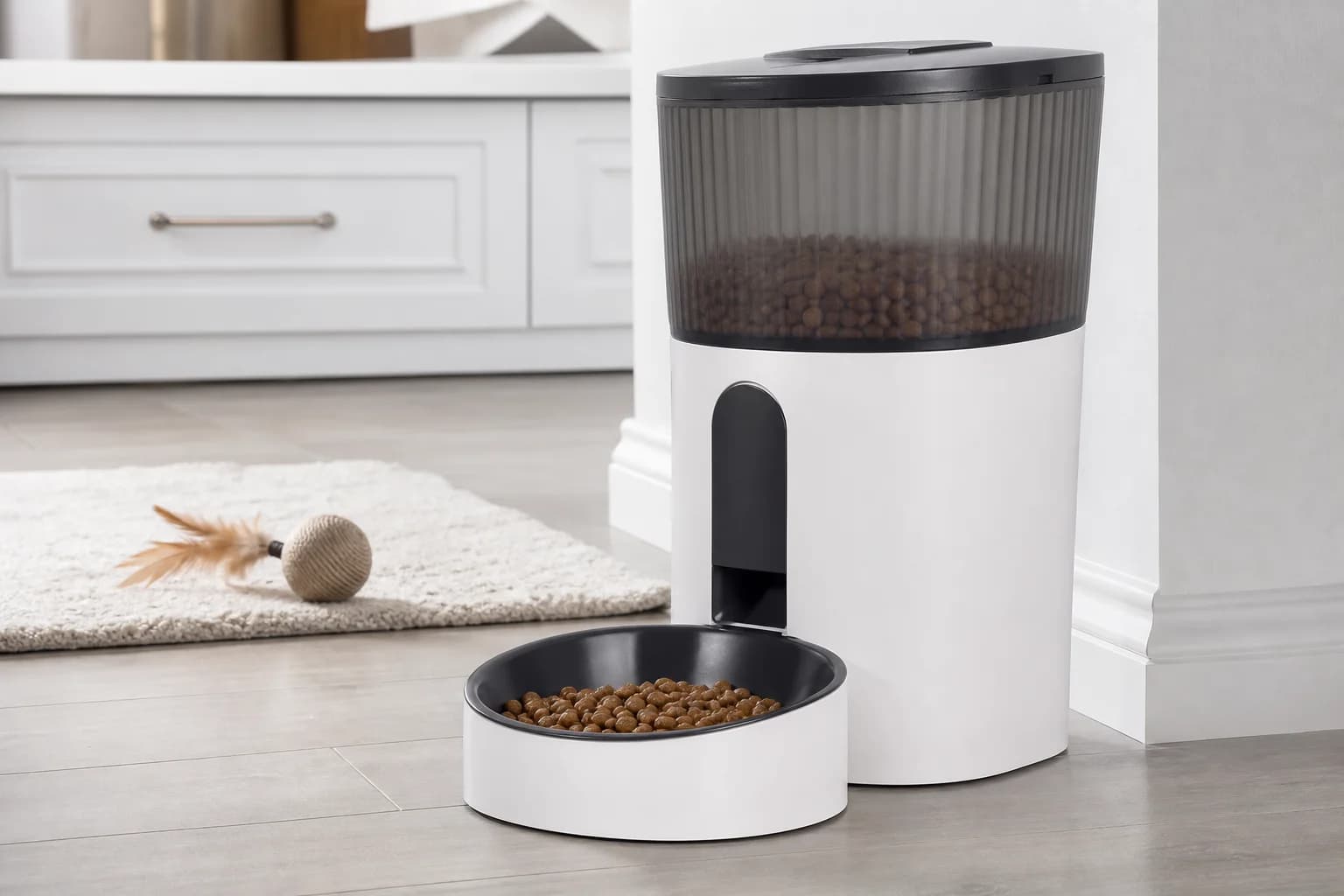
Open the named PETLIBRO Granary Smart Cat Feeder listing to compare the live price, availability, delivery, seller, and returns.
How to think about kibble shape, portion repeatability, feeding schedules, and backup plans before trusting an automatic feeder.
Prepared by the PawSelect Picks editorial deskUpdated July 28, 2026
Quick answer
The practical answer
Different kibble shapes settle differently, so a cup-based setting can hide meaningful calorie differences. After setup, run several test meals and weigh the output before relying on the schedule.
Direct answer to the buying question
How many grams is one PETLIBRO automatic feeder portion?
There is no fixed gram value for one PETLIBRO portion. For PLAF103 and PLAF301, PETLIBRO describes one portion as approximately 20mL, or about 1/12 cup, by volume. Kibble size, shape, density, and freshness change its weight, so weigh several dispenses of the exact food and recalculate after changing kibble.
Page structure updated August 13, 2026•Evidence checked July 28, 2026•Reconfirm exact model and current terms
Editorial image for visual context; device appearance and configuration can vary by model and region.
Portions are not just cup markings
Different kibble shapes settle differently, so a cup-based setting can hide meaningful calorie differences. After setup, run several test meals and weigh the output before relying on the schedule.
Start with the daily routine
Decide how many meals the pet needs, when the feeder should run, and who checks the bowl. The best feeder is the one that makes the normal routine easier without removing human oversight.
Check food-path risk
Large, oily, or irregular kibble can jam more easily. If the feeder will be used while you are away, test the exact food for several days first.
Plan for power and water separately
A feeder does not solve water, litter, medication, or general pet checks. For longer absences, pair it with a backup plan rather than treating it as a full pet-care system.
Official PLAF103 and PLAF301 guidance that one portion is approximately 20mL by volume and varies in weight with the food.
Buying framework
What to check before you choose
Checklist
Confirm the product fits the pet's size, food type, room layout, and cleaning routine.
Check replacement parts, filters, bags, refills, or app features before comparing price.
Check recurring noise, durability, chewing-risk, and setup-friction patterns.
Common mistakes
Buying the largest or smartest option before checking daily cleaning effort.
Treating odor, hydration, feeding, or monitoring gear as a substitute for the routine itself.
Ignoring where the pet actually eats, sleeps, waits, or makes messes during the day.
Category checks
Capacity matters only after you count real daily parts or meals.
Cleaning access is a buying feature, not a minor detail.
Recurring parts and refills can change the total cost more than the sale price.
Decision rule
Choose the simpler product when the problem is routine consistency; choose the more specialized product only when it removes a repeated chore you already know you have.