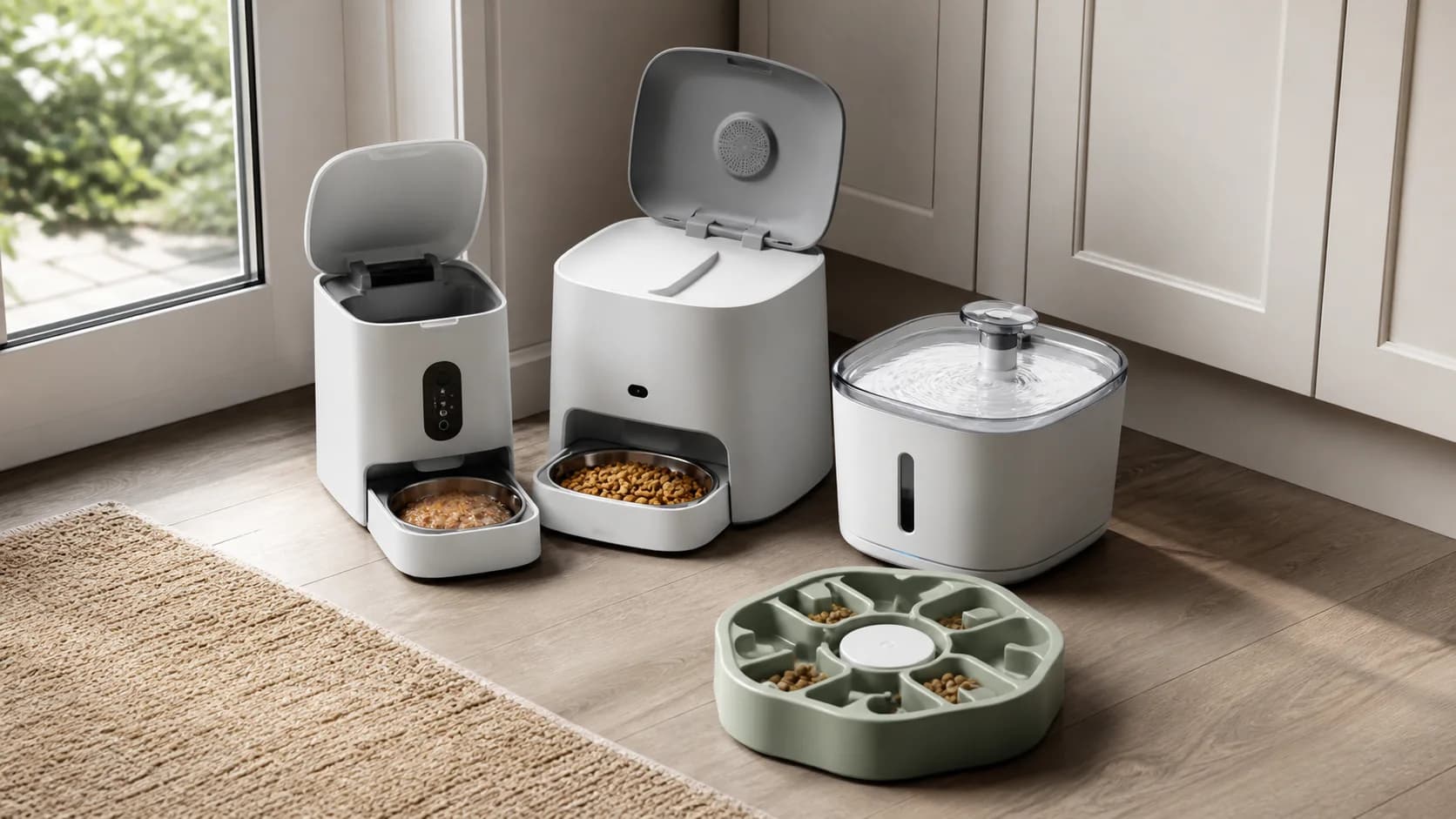
The real fork is specialized function versus rfid-tag feeders
Microchip pet feeders win when they can restrict a bowl to one identified pet in a multi-pet home and that function removes a known recurring problem. RFID-tag feeders win when they reach the same outcome with fewer dependencies, less maintenance, a more understandable failure mode, or a cleaner return path.
Normalize microchip standard or collar tag and bowl size and wet-food seal
Compare both paths across the same individual animal, home layout, feeding or elimination routine, sound tolerance, cleaning schedule, and manual backup, with every required dependency included. A complete microchip pet feeders package should not be compared with an incomplete alternative, and a retailer headline should not replace product-level compatibility evidence.
Use entry geometry and pet posture and battery, training mode, and unauthorized tailgating as tie-breakers
In a microchip pet feeders comparison, entry geometry and pet posture and battery, training mode, and unauthorized tailgating reveal the friction that appears after an attractive demo. Choose the path that can be installed, used, cleaned, updated, and recovered by the people who will actually own it. Prefer the simpler failure mode when performance is otherwise close.
Compare ownership, not only purchase price
Microchip pet feeders bring an ownership path of batteries, bowl and seal cleaning, training time, tag replacement, and monitoring whether another pet still steals food. Price that against the maintenance and replacement work of rfid-tag feeders over one normal year. Include the value of time and the cost of losing the service while a proprietary part, account, or repair is unavailable.
Make the choice reversible
Use this test path before the return window closes: enroll the intended pet, use gradual training mode, observe every animal around the feeder, and verify access before relying on scheduled care. Preserve the old setup and packaging until the product survives normal use. Choose the alternative immediately when the pet is frightened or cannot posture comfortably, another pet can tailgate, or feeding must be medically verified rather than merely restricted.