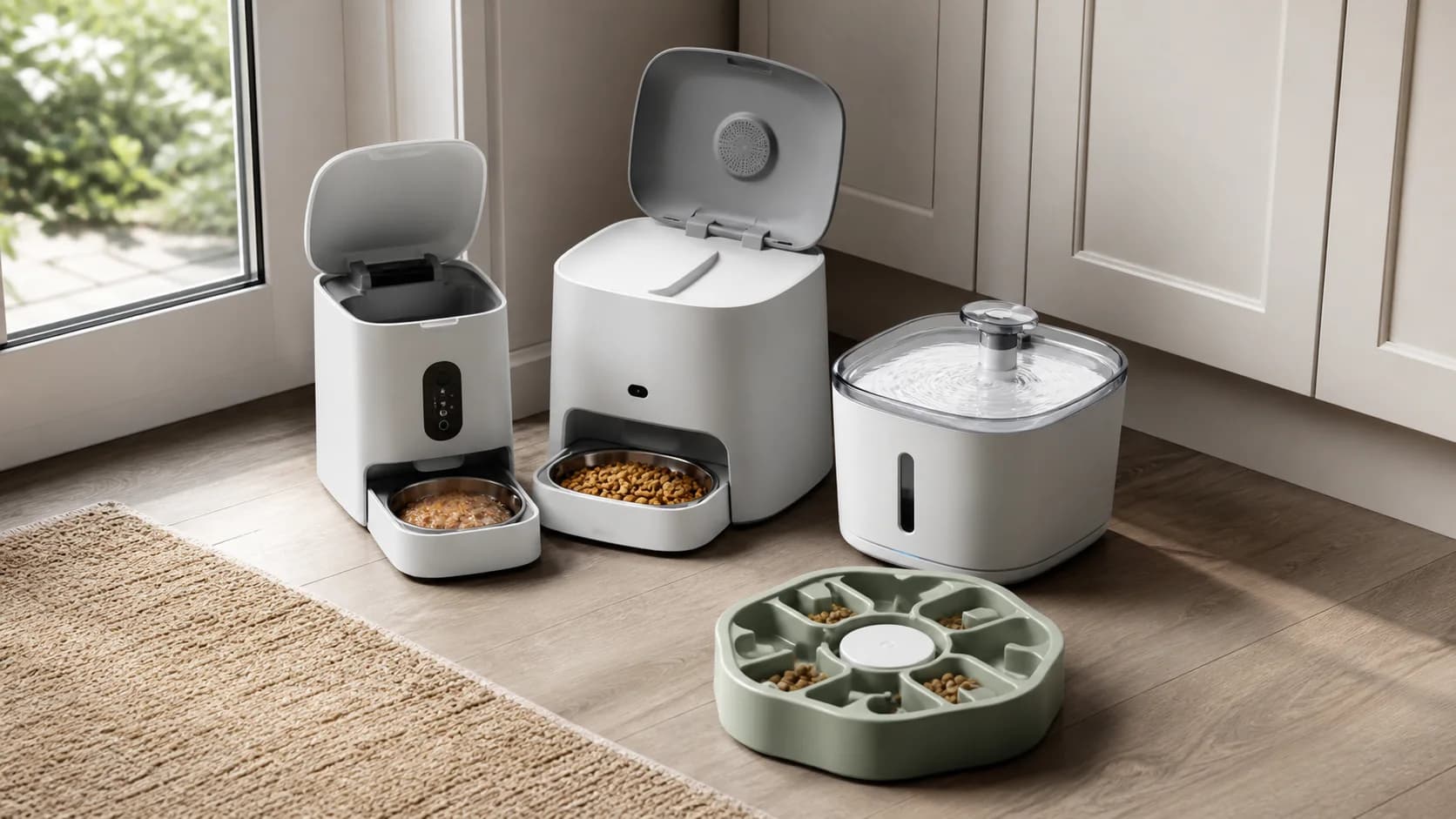
The real fork is specialized function versus dry-food feeders or manual feeding
Wet-food automatic feeders win when they can serve timed wet meals while controlling food temperature and avoiding long unsafe holding periods and that function removes a known recurring problem. dry-food feeders or manual feeding win when they reach the same outcome with fewer dependencies, less maintenance, a more understandable failure mode, or a cleaner return path.
Normalize compartment capacity and meal count and ice pack or active cooling method
Compare both paths across the same individual animal, home layout, feeding or elimination routine, sound tolerance, cleaning schedule, and manual backup, with every required dependency included. A complete wet-food automatic feeders package should not be compared with an incomplete alternative, and a retailer headline should not replace product-level compatibility evidence.
Use lid seal and pet access and timer reliability, cleaning, and power backup as tie-breakers
In a wet-food automatic feeders comparison, lid seal and pet access and timer reliability, cleaning, and power backup reveal the friction that appears after an attractive demo. Choose the path that can be installed, used, cleaned, updated, and recovered by the people who will actually own it. Prefer the simpler failure mode when performance is otherwise close.
Compare ownership, not only purchase price
Wet-food automatic feeders bring an ownership path of daily washing, cooling packs, batteries or charging, lid seals, odor, and replacement trays. Price that against the maintenance and replacement work of dry-food feeders or manual feeding over one normal year. Include the value of time and the cost of losing the service while a proprietary part, account, or repair is unavailable.
Make the choice reversible
Use this test path before the return window closes: portion the real food, test opening times while present, measure how long it remains acceptable under room conditions, and keep a manual feeding backup. Preserve the old setup and packaging until the product survives normal use. Choose the alternative immediately when the food cannot stay safely chilled, the pet can break into compartments, medication timing is critical, or missed meals require human supervision.