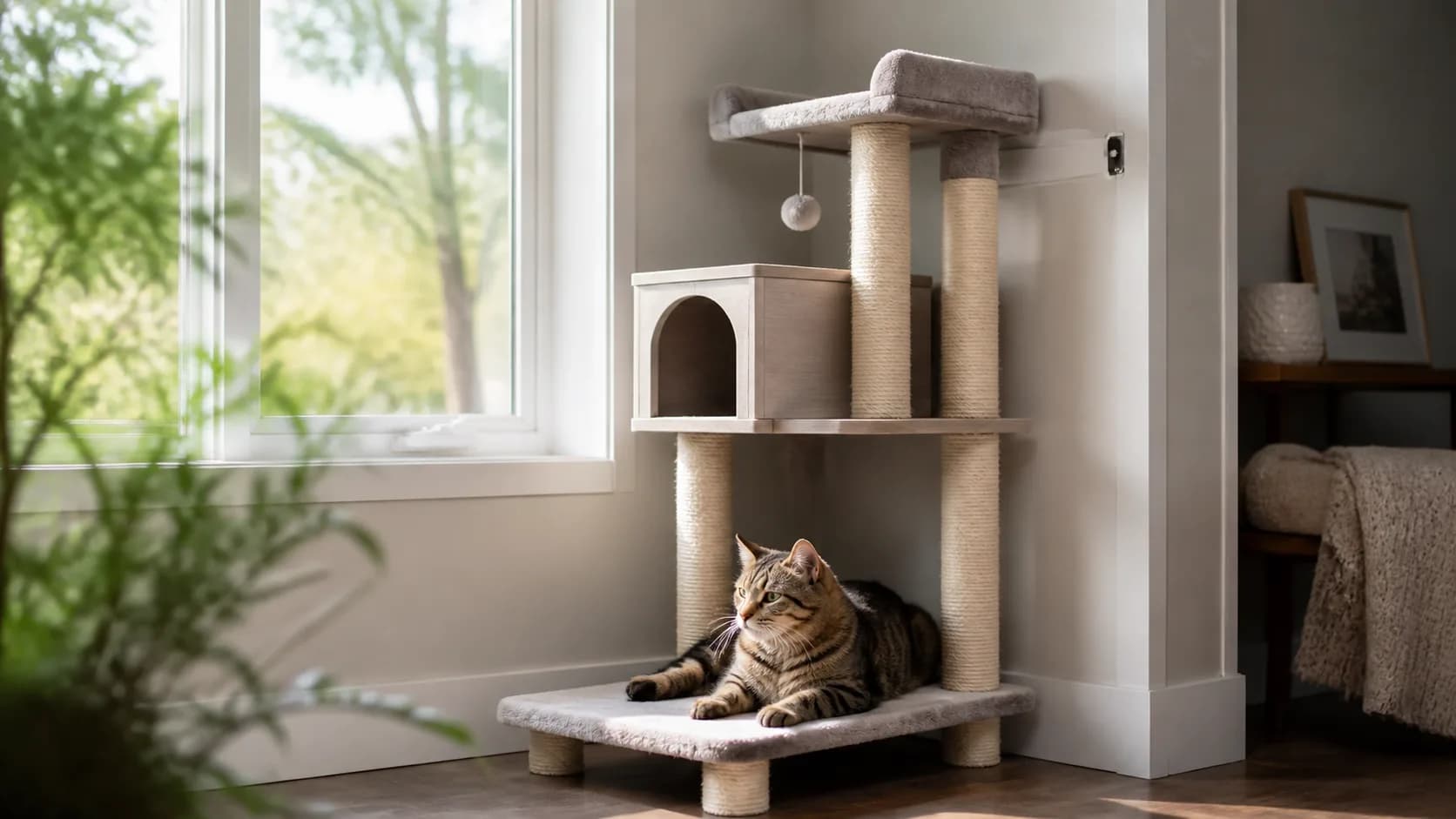
Buy for the cat, not the silhouette
Measure body length, comfortable curl or stretch, shoulder width, and the current height each cat reaches willingly. Observe vertical versus horizontal scratching, enclosed versus open sleep, and whether age, weight, vision, arthritis, or confidence changes jumping. A dramatic tower can fail if its usable surfaces are too small.
Evaluate stability as a system
Compare base width and weight, tower height, post spacing, connector design, floor level, wall distance, anchor hardware, and the force of a running jump. Assemble on a flat surface, tighten in the specified order, use the approved anti-tip attachment, and recheck fasteners after initial use. Keep unstable units out of service.
Trace routes for every cat
Map the approach, landing, climb, turnaround, retreat, and descent. Multi-cat homes need more than one comfortable destination and routes that reduce blocking. Older or small cats may benefit from closer steps and broad landings; an agile large cat still needs perches and openings that support its actual body.
Judge scratching and cleaning separately
Check how much post height remains available for a full stretch, whether rope or fabric can be replaced, and which orientation the cats already prefer. Inspect exposed staples, loose fibers, torn plush, wobbling posts, hair, vomit, and odor. Follow material-specific cleaning instructions and dry fully before access.
Consider lower and distributed alternatives
Use a lower broad tower when tip risk or mobility makes height less useful. Wall shelves can distribute routes but require appropriate wall structure and precise installation. Separate beds and scratchers can be easier to clean and replace in a small room. Choose the arrangement that creates stable usable territory, not the largest object that fits the floor plan.