Open the exact family listing to compare the live price, availability, delivery, seller, and returns.
Choose a scratching post by the cat's observed orientation and material preference, full-stretch height, base stability, post diameter, placement, replacement wrap, furniture protection, and multi-cat access.
Prepared by the PawSelect Picks editorial deskUpdated August 11, 2026
Quick answer
The practical answer
Observe whether the cat scratches vertically or horizontally and which texture it already chooses. A vertical post should support a full body stretch and remain rigid when pulled at the top; a broad heavy base and thick post matter more than decorative platforms. Place it beside the existing scratch location and key resting or entry zones, reward voluntary use, offer an alternate texture, and never punish or force paws onto it.
Common buying question
How tall and stable should a cat scratching post be, and is sisal rope or fabric better?
Cat-tree, litter, and enrichment pages do not isolate the scratching surface, top-load stability, replacement material, furniture adjacency, or the behavior plan for redirecting an established location.
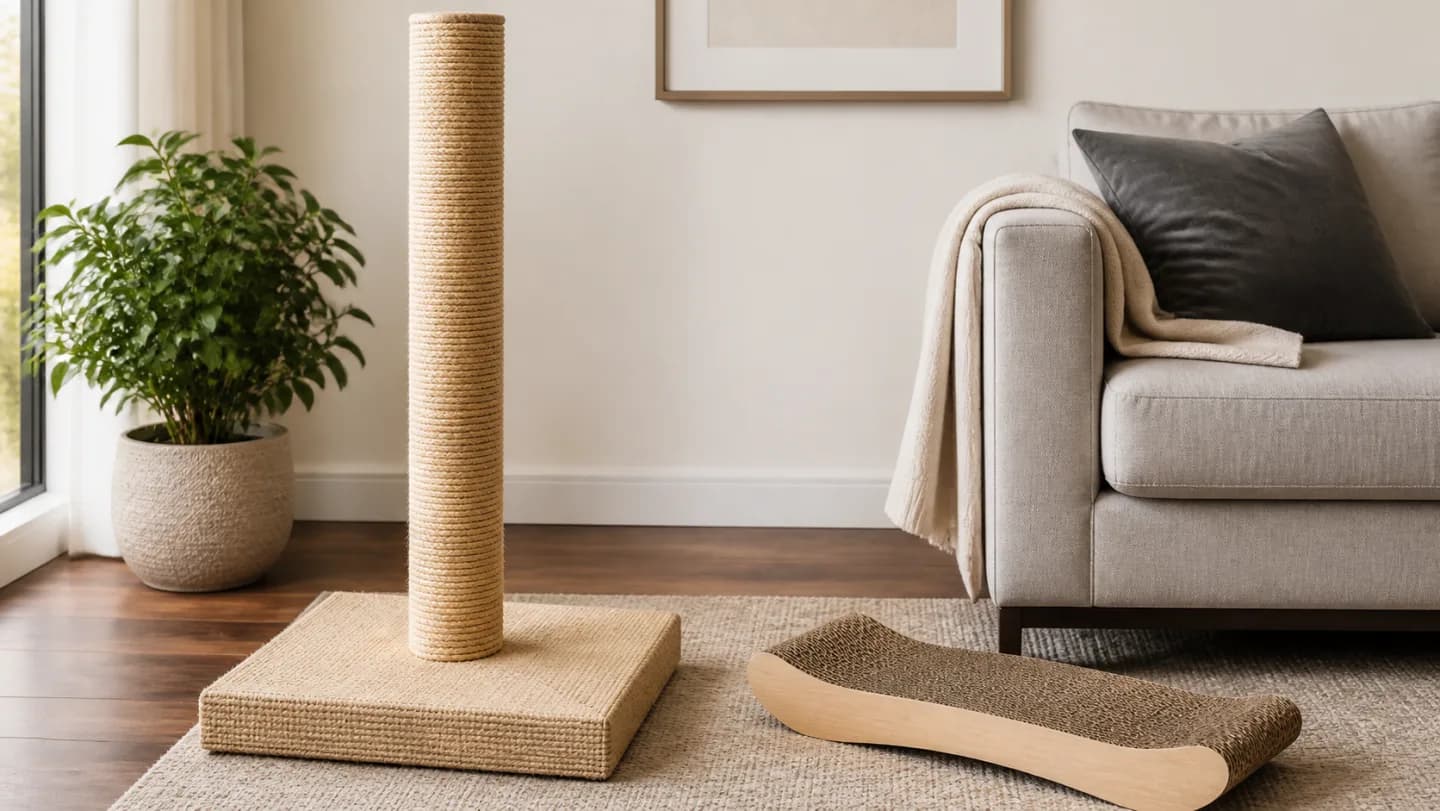
Original editorial image for category, fit, and use context; verify the exact linked product appearance and configuration on the retailer page.
Observe the behavior before buying furniture
Note whether the cat scratches upright, stretched forward, crouched, or at an angle; which fabric, wood, cardboard, or rug is selected; and whether scratching happens after sleep, near a doorway, during play, or beside people. These clues identify orientation, texture, and location more reliably than choosing the post that best matches room decor.
Provide full stretch and a rigid target
For a vertical scratcher, compare the cat's extended reach with usable abrasive height, excluding smooth caps and base trim. Push and pull the assembled post at the top. It should not tip, rotate, or walk across the floor under realistic force. Large cats may need a wider, heavier base and thicker column even when product photos show a smaller cat comfortably posed.
Offer the texture the cat chooses
Woven sisal fabric, sisal rope, corrugated cardboard, carpet, and bare wood have different resistance and claw feel. Rope can develop gaps as it wears; carpet may resemble household carpet. Offer more than one appropriate surface when preference is uncertain. Avoid heavily scented attractants and never physically drag claws over the material, which can create avoidance or injury.
Put it where the message is being left
Place the new post directly beside the current scratch target, sleeping area, doorway, or social route, with clear approach space. Protect furniture temporarily with an appropriate deterrent or cover while rewarding voluntary use with play or treats. Moving the post to a hidden corner immediately after success can remove the location value that made it effective.
Maintain the surface and structure
Tighten hardware, check floor grip, and inspect for protruding staples, splintered wood, loose caps, hanging fibers, and swallowed pieces. Fraying can make a post more attractive, but detached rope and exposed fasteners are not harmless wear. Rewrap only with safe material and secure methods, or replace the unit when structure or base stability cannot be restored.
Current Amazon option
Check this exact product
ANWA 32" Tall Sisal Cat Scratching Posts Tree for Indoor Cats Adults, Beige | Sisal Cat Scratcher, Small Space, Cat Post with Dangling Plush Toys for Indoor Cats, 15.7" Stable Base, Cat Furniture
ASIN
B0BML72176
Brand
ANWA
Listing checked
8/11/2026
Compare the current title, ASIN, variant, seller, stock, shipping, price, and return path before ordering.
Exact US checkout identity for this draft. Recheck the selected variation, seller, included parts, live availability, and any recall notice on release day.
Public owner context
Questions to answer before buying
Community discussions help surface installation, fit, maintenance, and failure questions. They are anecdotal context, not product specifications or a substitute for current instructions.
Used to locate real owner questions and failure reports that shape the inspection checklist. Anecdotes are not presented as measured product tests or copied as endorsements.
How this page was governed
Page-specific editorial method
1.Observe and photograph actual scratching orientation, height, material, timing, and location before shopping.
2.Measure full stretch and select a rigid post with a base that resists a strong pull from the top.
3.Place beside the chosen furniture or route, add an alternative texture, and reinforce voluntary investigation.
4.Inspect fibers, caps, staples, bolts, wobble, and floor grip weekly and repair or replace before parts detach.