Slow Feeder Dog Bowl Guide: Maze Fit, Portion Size, and Cleaning
Current retailer option
MateeyLife 2-Pack Slow Feeder Dog Bowls, 2 Cups, Dog Puzzle Feeder Bowl | Food-contact safe, dishwasher safe, non-slip base, maze design, for fast eaters, for dogs and cats, daily mealtimes
Open the exact family listing to compare the live price, availability, delivery, seller, and returns.
Choose a slow-feeder bowl by veterinary goal, muzzle and tongue geometry, food type, measured portion volume, maze difficulty, base stability, material, cleaning access, and frustration response.
Prepared by the PawSelect Picks editorial deskUpdated August 11, 2026
Quick answer
The practical answer
Ask a veterinarian about sudden gulping, vomiting, swallowing problems, abdominal signs, or a medical diet before treating speed as a bowl problem. Choose a food-safe bowl large enough for the measured meal and a maze the dog can reach without scraping the face. Start with easy channels, supervise, time meals, watch stress and posture, and stop if the dog bites, flips, guards, gives up, or cannot retrieve food comfortably.
Common buying question
Which slow feeder bowl shape is safe for my dog's muzzle and food, and how much slower should eating become?
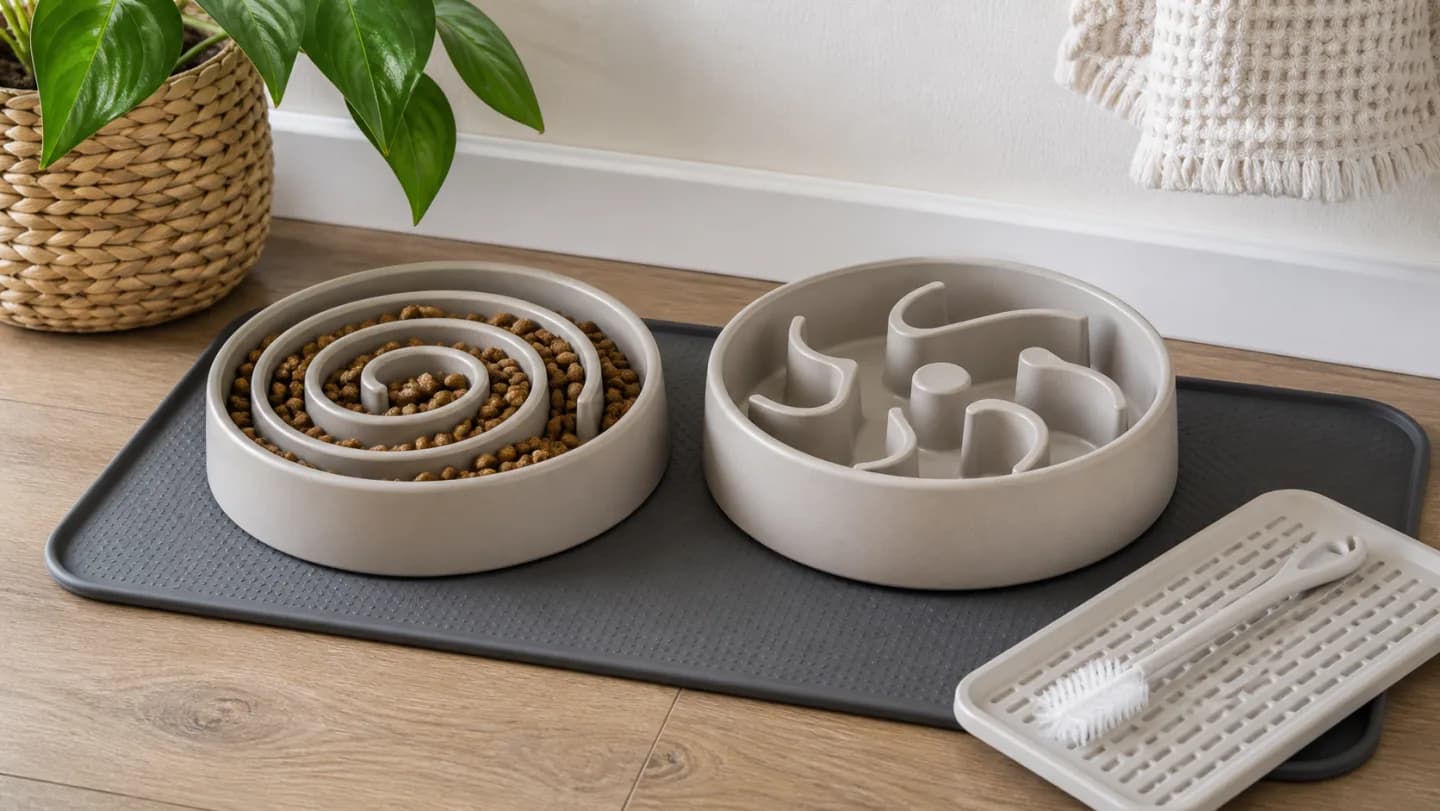
Original editorial image for category, fit, and use context; verify the exact linked product appearance and configuration on the retailer page.
Clarify the problem before changing the bowl
Record meal size, food, eating time, posture, regurgitation, vomiting, coughing, weight plan, and behavior. New or concerning symptoms, abdominal swelling, repeated unproductive retching, breathing difficulty, or distress require veterinary attention rather than online bowl selection. A slow feeder may alter access speed, but it does not diagnose or prevent every condition associated with rapid eating.
Fit channels to muzzle and tongue
Measure muzzle width and length and consider flat faces, long noses, missing teeth, dental pain, tongue mobility, vision, age, and neck comfort. The dog should retrieve food without rubbing nose or eyes on hard ridges. Start with broad shallow channels; a maze that produces a dramatic time increase by physically blocking access is not automatically a better design.
Confirm the whole meal fits
Pour the measured portion, including toppers and medication only as directed, and ensure food remains inside the channels without a mound above them. Wet food needs smooth reachable surfaces and prompt washing. Large kibble can bridge narrow paths, while tiny pieces can hide in corners. Do not reduce a prescribed meal accidentally because the bowl's advertised capacity describes water volume.
Watch emotion as well as the timer
Supervise and compare calm eating, body tension, vocalization, pawing, biting, flipping, guarding, leaving, and recovery after the meal. Some dogs benefit from a modest slower pace; others find a maze aversive. Easier patterns, scattering on an approved surface, multiple small meals, or a veterinary feeding plan may be more appropriate than escalating difficulty.
Clean every channel and retire damage
Wash after each meal according to material instructions, reach ridge bases and seams, rinse away detergent, and dry fully. Inspect plastic for deep scratches, chewed edges, cracks, and detached nonslip parts. Test suction on a clean permitted surface, but never leave a destructive chewer alone with the bowl. Replace damaged food-contact equipment rather than sanding or gluing it.
Current Amazon option
Check this exact product
MateeyLife 2-Pack Slow Feeder Dog Bowls, 2 Cups, Dog Puzzle Feeder Bowl | Food-contact safe, dishwasher safe, non-slip base, maze design, for fast eaters, for dogs and cats, daily mealtimes
ASIN
B0C5HSCS8J
Brand
MateeyLife
Listing checked
8/11/2026
Compare the current title, ASIN, variant, seller, stock, shipping, price, and return path before ordering.
Exact US listing reference. Confirm the selected variation, seller, included parts, live availability, and any applicable recall notice before buying.
Public owner context
Questions to answer before buying
Community discussions help surface installation, fit, maintenance, and failure questions. They are anecdotal context, not product specifications or a substitute for current instructions.
Used to locate real owner questions and failure reports that shape the inspection checklist. Anecdotes are not presented as measured product tests or copied as endorsements.
Research notes
How we evaluated these choices
1.Record the measured meal, current eating time, posture, symptoms, and veterinary guidance before changing equipment.
2.Measure muzzle and food geometry, then select an easy pattern with full meal capacity and face clearance.
3.Supervise initial meals, time calmly, and watch for scraping, biting, flipping, guarding, fatigue, or abandonment.
4.Wash and dry after each use, inspect for damage, and adjust difficulty or stop based on the dog's response.