Measure the individual dog
Measure standing height to the top of the head or ears as appropriate, nose-to-rump length, turning space, and the natural lying posture. Compare those measurements with the exact interior dimensions and current manufacturer sizing guidance. Breed and weight ranges are starting points because dogs of the same label can have different proportions.
Plan doors and room clearance
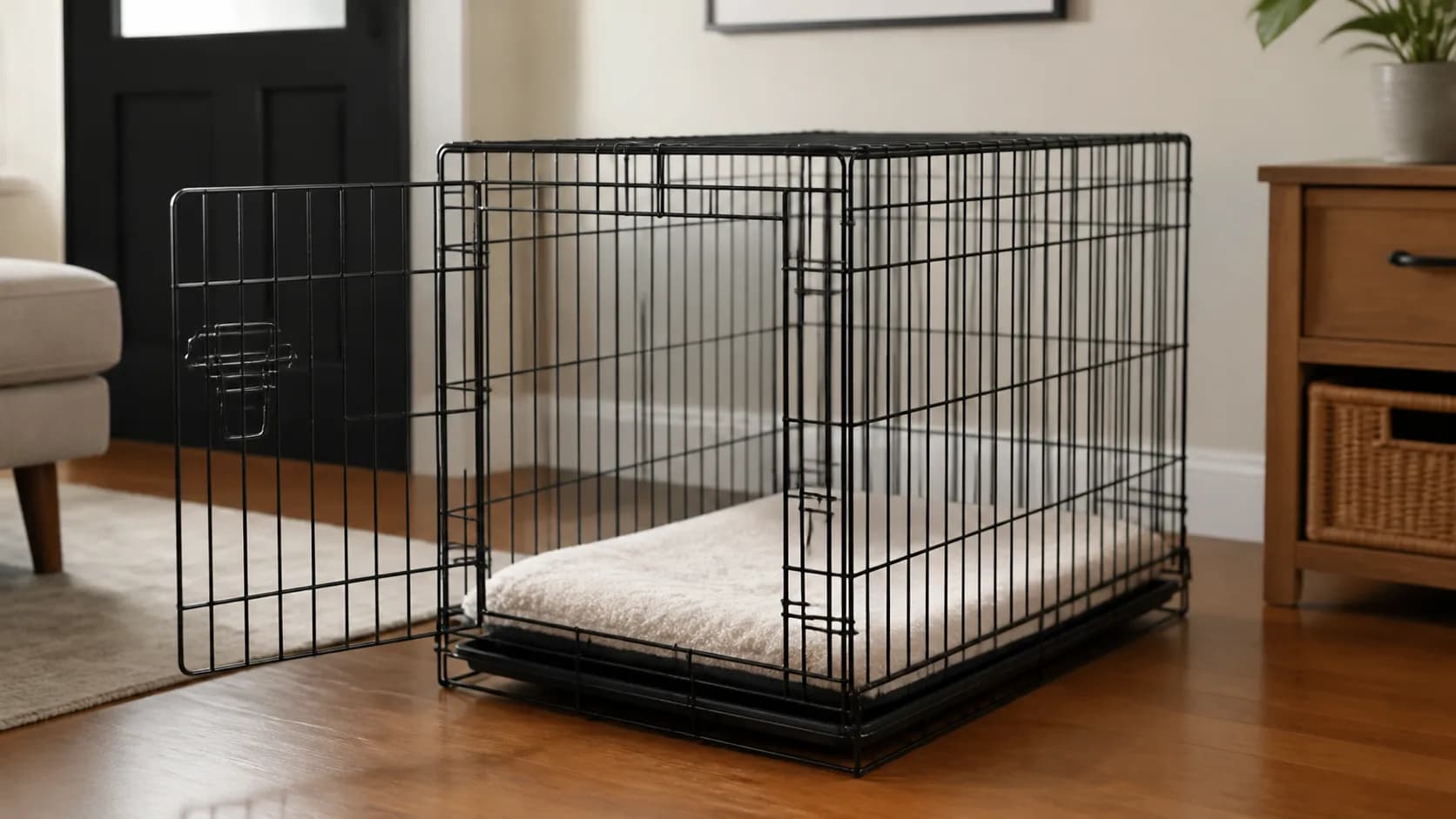
Mark the crate's outside footprint, every door swing, latch reach, baseboard, vent, heater, sunlight, cord, foot traffic, and emergency exit. Confirm the tray can slide out for cleaning without moving furniture. A second door is valuable only if it creates a genuinely safer or easier placement.
Inspect the folded frame and divider
Follow the assembly sequence, fully engage frame hooks and locks, secure the divider exactly as instructed, and inspect wire ends, welds, coating, hinges, handles, latches, tray, and gaps. Remove collars or gear when advised to reduce snag risk, and never lift or carry an occupied folding crate by its handle.
Introduce confinement gradually
Pair the crate with short voluntary sessions, normal rewards, and calm release rather than using it as punishment. Monitor for panting, drooling, frantic escape attempts, bent wire, injury, or escalating distress. A dog that panics in confinement may need veterinary or qualified behavior support, not simply a heavier crate.
Keep each crate type in its lane
A home wire crate is not automatically approved as vehicle restraint or airline cargo equipment. Check the carrier, vehicle, airline, and destination rules for the exact trip. Choose plastic or soft-sided construction only when its containment, ventilation, access, cleaning, and the dog's behavior fit the real job.