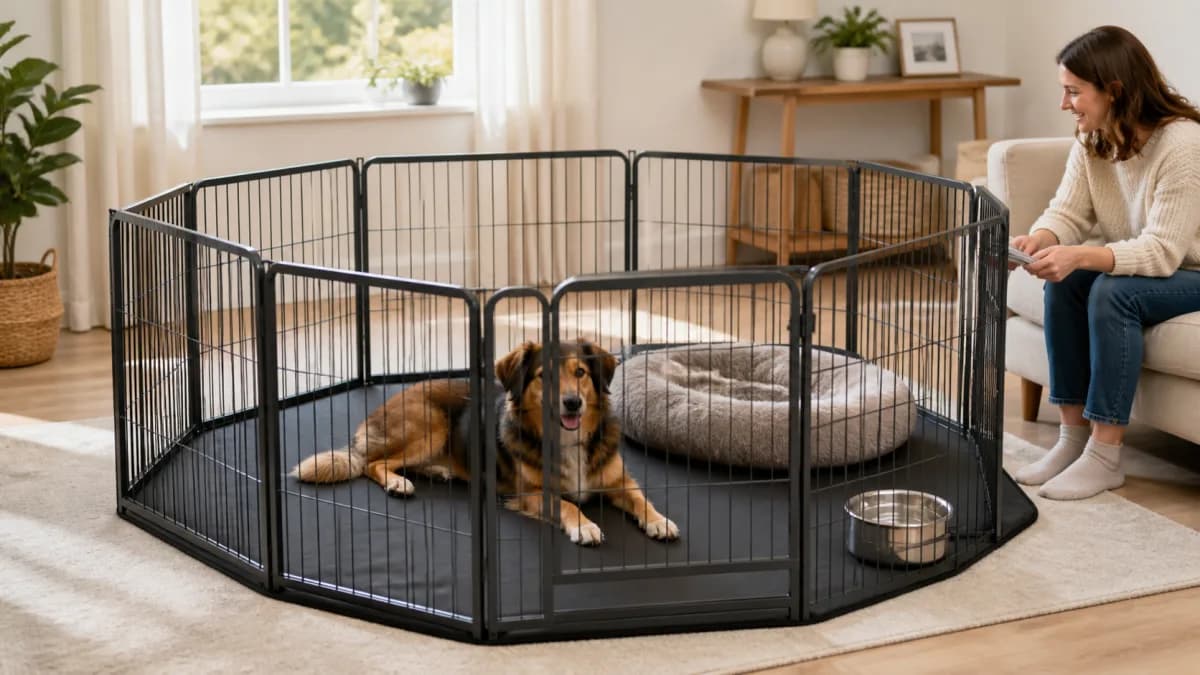
Choose for behavior, not a breed chart
Watch how the individual dog approaches barriers. Some small dogs climb wire grids, some athletic puppies jump early, some push panels across smooth floors, and anxious dogs may chew or panic. Height and weight charts are starting points, not guarantees. If confinement causes escalating distress, work with a veterinarian or qualified behavior professional rather than buying progressively taller barriers without addressing the cause.
Calculate usable space after furnishing
Tape the proposed round, square, or rectangular footprint on the floor. Add the crate if attached, a spill-resistant water bowl, resting surface, safe enrichment, and a toilet zone only when appropriate to the training plan. Leave room for the dog to stand, turn, stretch, and rest away from waste. Also leave human access for cleaning and emergency release.
Inspect panels, gaps, connectors, and the door
Check wire or plastic edges, panel spacing, hinge gaps, thumb clips, latches, and the top edge. The dog should not fit its head, body, paw, jaw, collar tag, or harness hardware into a trapping gap. A door improves handling but can add a raised threshold and manipulable latches. Remove collars or equipment only according to the supervised safety plan and professional advice.
Stabilize for the actual surface
Outdoor ground anchors work only in suitable ground and do not authorize unattended use. Indoors, follow the maker's configuration rules and use a compatible floor protector or non-slip surface without creating chewable loose edges. Do not drill, tie, or improvise wall attachments unless the manufacturer supports them. Joining to a crate or using the panels as a barrier changes forces and must remain stable.
Introduce the pen as a managed space
Begin with short positive sessions while present, provide appropriate enrichment, and observe settling, elimination, chewing, climbing, and attempts to escape. Increase duration gradually within the dog's needs. Keep outdoor sessions directly supervised with weather, shade, water, and predators considered. A pen is a management tool; it is not exercise by itself and does not replace walks, training, social contact, or care.