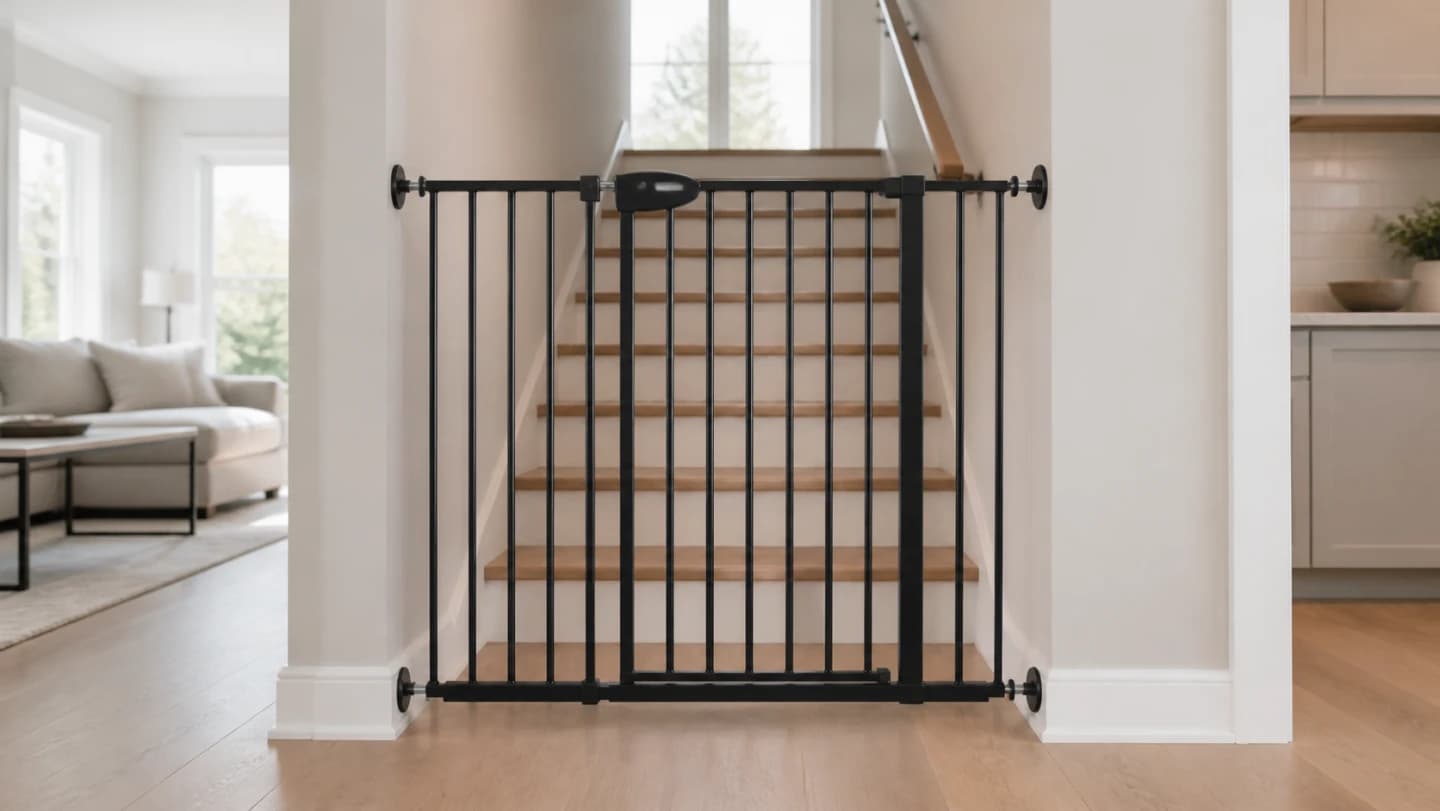
Pressure-Mounted Pet Gate Guide: Opening Fit, Height, and Stair Limits
Current retailer option
Carlson Extra Tall Walk Through Pet Gate with Small Pet Door, Includes 4-Inch Extension Kit, 4 Pack Pressure Mount Kit and 4 Pack Wall Mount Kit, Platinum, Gray
Open the exact family listing to compare the live price, availability, delivery, seller, and returns.
Choose a walk-through pressure pet gate by finished opening, wall and trim contact, pet size and jumping, bar spacing, latch, threshold, extensions, small-pet door, and stair placement.
Prepared by the PawSelect Picks editorial deskUpdated August 11, 2026
Quick answer
The practical answer
Use a pressure gate only where the exact manufacturer permits it. Top-of-stair locations generally require a gate specifically approved and hardware-mounted for that use because pressure gates can dislodge and their bottom bar creates a trip hazard. Measure the finished opening at several heights, identify wall and trim surfaces, then match gate height, bar spacing, latch, extensions, and small-door design to the individual pet's jumping, squeezing, climbing, and chewing behavior.
Common buying question
Can I use a pressure-mounted pet gate at the top of stairs, and what height and bar spacing will contain my dog safely?
Original editorial image for category, fit, and use context; verify the exact linked product appearance and configuration on the retailer page.
Let the location determine the mounting class
A pressure gate relies on opposing surfaces and can be knocked loose. Its bottom frame also remains across the walking path. At a top-of-stair opening, those failures have greater consequences; use only a gate and hardware method explicitly approved for that exact location and structure. When instructions or surfaces are uncertain, choose another containment plan rather than improvising.
Measure the finished opening at several points
Record width at floor, lower pressure pads, upper pads, and top rail. Include baseboards, quarter-round, door stops, uneven trim, banisters, and any angle. Determine the exact extension combination allowed; extensions are not interchangeable across models. A gate at the edge of its range may have poor pad contact or an awkwardly positioned walk-through opening.
Match geometry to observed behavior
Measure the pet, but also watch jumping, climbing, squeezing, pawing, chewing, and door-rushing. Extra height does not help if a determined dog can use horizontal bars as a ladder, and narrow pets may pass through bar gaps. Inspect any built-in cat door: it may also pass the puppy the gate is intended to contain.
Make human passage reliable
Everyone in the home should operate the latch with one hand, recognize when it is fully closed, and step over the threshold without catching a foot. Auto-close mechanisms need correct alignment and may not latch from every opening angle. Avoid a location where carrying laundry, food, or a pet makes the threshold or narrow door an everyday hazard.
Install, acclimate, and inspect
Use every required wall cup, pad, bolt, extension pin, and wrench setting exactly as directed. Verify walls are sound and permitted for pressure. Introduce the closed gate calmly and do not leave a distressed pet to ram or chew it. Check tension, alignment, latch, pads, bars, and surrounding surface routinely and after any impact or move.
Current Amazon option
Check this exact product
Carlson Extra Tall Walk Through Pet Gate with Small Pet Door, Includes 4-Inch Extension Kit, 4 Pack Pressure Mount Kit and 4 Pack Wall Mount Kit, Platinum, Gray
ASIN
B01DAGKAIM
Brand
Carlson Pet Products
Listing checked
8/11/2026
Compare the current title, ASIN, variant, seller, stock, shipping, price, and return path before ordering.
Exact US listing reference. Confirm the selected variation, seller, included parts, live availability, and any applicable recall notice before buying.
Public owner context
Questions to answer before buying
Community discussions help surface installation, fit, maintenance, and failure questions. They are anecdotal context, not product specifications or a substitute for current instructions.
Used to locate real owner questions and failure reports that shape the inspection checklist. Anecdotes are not presented as measured product tests or copied as endorsements.
Research notes
How we evaluated these choices
1.Observe the pet's jump, squeeze, climb, paw, chew, and gate-rushing behavior in supervised low-risk settings.
2.Measure the finished opening at every contact height and photograph baseboards, trim, banisters, and stair edges.
3.Reject pressure mounting anywhere the exact instructions prohibit it, especially when dislodgement creates a fall.
4.Install and tension to specification, test the latch and threshold, supervise acclimation, and recheck pads frequently.