Open the exact family listing to compare the live price, availability, delivery, seller, and returns.
Choose a rear-seat dog cover by vehicle dimensions, bench or hammock layout, headrest anchors, door protection, nonslip layers, seat-belt openings, cleaning, and crash-restraint compatibility.
Prepared by the PawSelect Picks editorial deskUpdated August 11, 2026
Quick answer
The practical answer
Measure the usable bench, seatback, headrests, buckle locations, LATCH anchors, console, door width, and floor gap before choosing a bench or hammock cover. The cover protects upholstery; it is not a crash restraint. Keep the vehicle's approved pet-restraint path accessible, follow restraint and vehicle instructions, preserve airbags and vents, and test that the cover cannot slide, bunch, or trap a dog during entry and braking.
Common buying question
Which dog car seat cover fits my rear bench without blocking seat belts, child-seat anchors, vents, or a pet restraint?
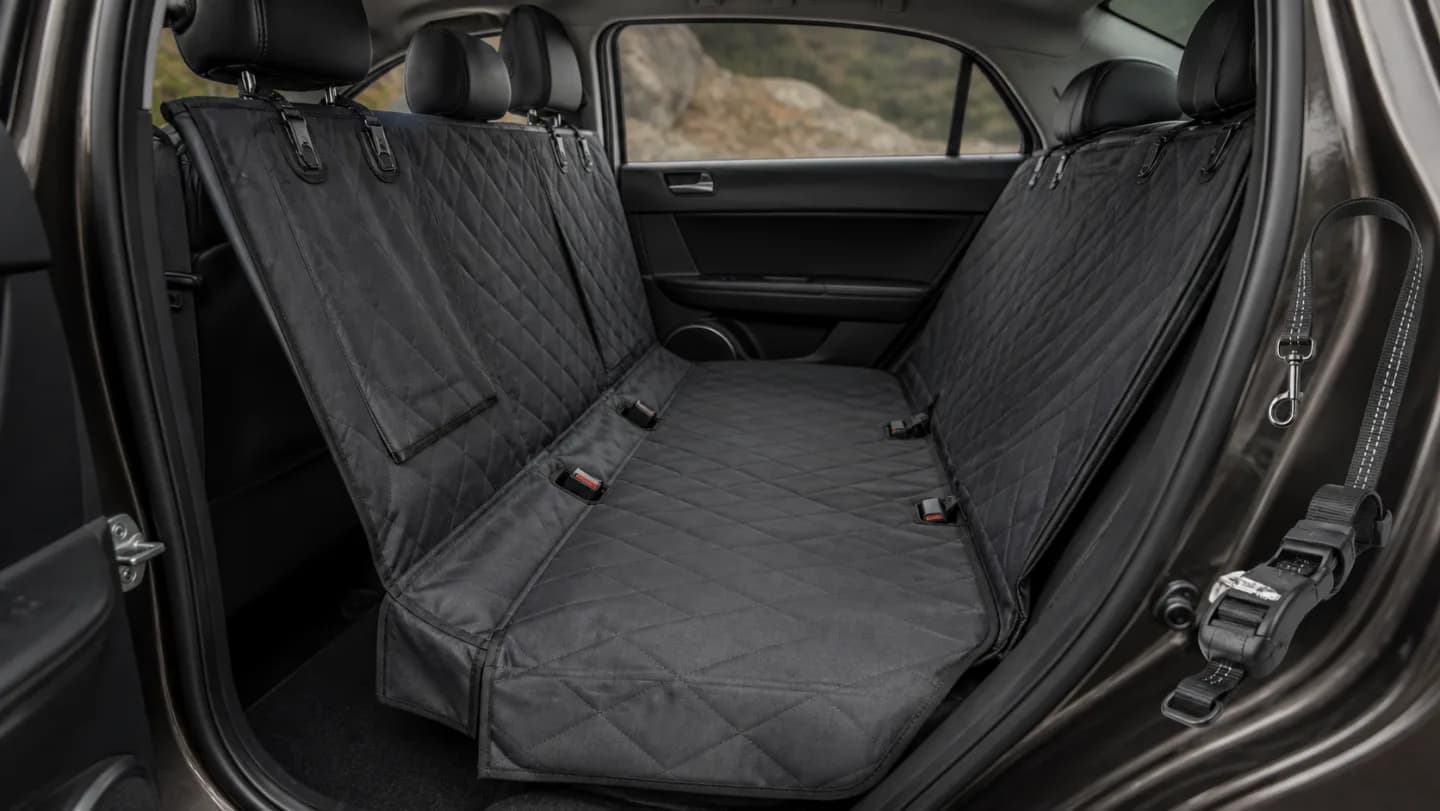
Original editorial image for category, fit, and use context; verify the exact linked product appearance and configuration on the retailer page.
Measure the cabin, not the product category
Record bench width and depth, seatback height, headrest type, split-fold seams, center console, door openings, buckle stalks, LATCH points, and floor gap. Compare those values with the cover body and side flaps. A universal hammock can sag into a wide footwell, while an overwide cover can bunch over buckles or push against door seals.
Keep restraint separate from upholstery protection
A seat cover does not restrain a dog in a crash, regardless of quilting, anchors, or a zippered hammock. Choose and use a carrier or restraint according to its instructions and current safety evidence, then ensure the cover preserves its belt and anchor routing. Never clip a travel tether to a decorative cover strap or ordinary collar.
Protect vehicle safety systems
Do not block side airbags, seat-mounted airbags, vents, child-seat anchors, belt latches, or seat occupancy systems. Check the vehicle manual before placing layers on seats with sensors or heated and ventilated surfaces. If a cover opening does not align naturally, do not cut a new slot that can weaken the seam or expose loose material.
Build stable footing and low-stress entry
Tighten headrest loops and seat anchors so the surface lies flat, then press and pull from every direction. Add a compatible non-slip layer only if both cover and vehicle permit it. Support older or mobility-limited dogs with a ramp when appropriate, introduce the stationary setup with rewards, and prevent nails or paws from becoming caught in zippers and openings.
Plan the dirty removal path
After mud, hair, or an accident, the cover should leave the car without spilling debris onto seats or trapping moisture. Follow washing and drying limits, inspect waterproof backing and seams, and dry completely before storage. Vacuum grit beneath the cover and check upholstery early for dye transfer, condensation, or abrasion, especially on leather or light-colored interiors.
Current Amazon option
Check this exact product
Honest Dog Car Seat Covers, Dog seat Cover with Side Flap for Cars, Trucks, and Suv's - Waterproof & Nonslip Pet Seat Cover for Backseat
ASIN
B08398BV5S
Brand
HONEST OUTFITTERS
Listing checked
8/11/2026
Compare the current title, ASIN, variant, seller, stock, shipping, price, and return path before ordering.
Exact US listing reference. Confirm the selected variation, seller, included parts, live availability, and any applicable recall notice before buying.
Public owner context
Questions to answer before buying
Community discussions help surface installation, fit, maintenance, and failure questions. They are anecdotal context, not product specifications or a substitute for current instructions.
Used to locate real owner questions and failure reports that shape the inspection checklist. Anecdotes are not presented as measured product tests or copied as endorsements.
Research notes
How we evaluated these choices
1.Measure the exact vehicle interior and mark every safety anchor, vent, airbag, buckle, and moving seat part.
2.Map the dog's separate restraint or secured-carrier path before deciding cover openings and hammock layout.
3.Install empty, pull every anchor, cycle doors and seats, and brake-test at low speed with no animal aboard.
4.Introduce the dog gradually, inspect footing and stress, and clean and dry the cover according to instructions.