Open the exact family listing to compare the live price, availability, delivery, seller, and returns.
Choose a backpack carrier by pet measurements and weight, usable internal floor, ventilation, structure, openings, tether policy, escape resistance, base support, caregiver torso fit, and trip duration.
Prepared by the PawSelect Picks editorial deskUpdated August 11, 2026
Quick answer
The practical answer
Measure the pet standing, sitting, and lying, then compare with usable internal dimensions—not only a weight limit. The animal should maintain a natural posture, ventilation must remain open on the caregiver's body, and the base must stay level without collapse. Acclimate gradually indoors, secure every zipper, never tether to a collar, monitor temperature and stress continuously, and use a rigid hand carrier when backpack motion or duration is unsuitable.
Common buying question
What size backpack carrier is safe and comfortable for my cat or small dog, and how long can a pet stay in it?
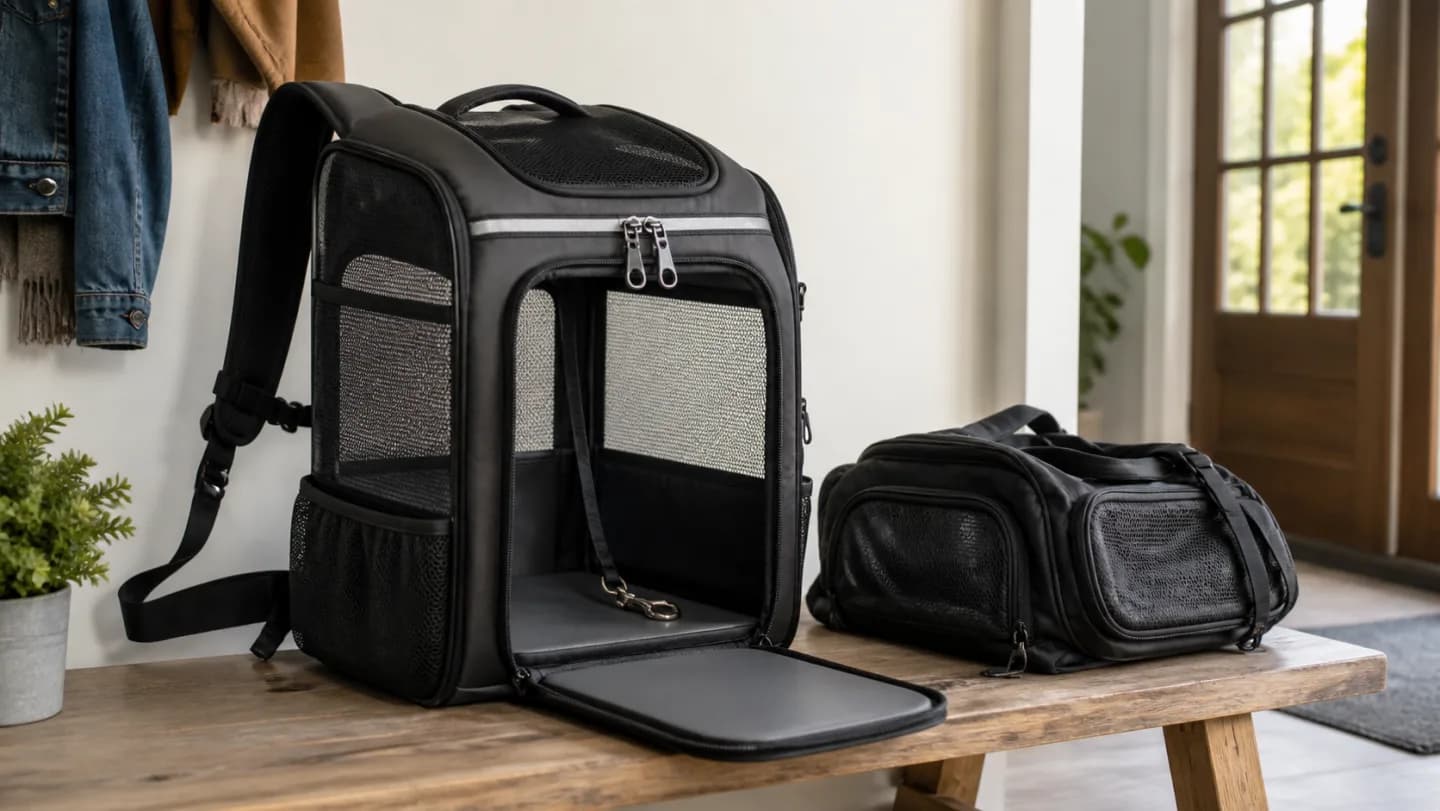
Original editorial image for category, fit, and use context; verify the exact linked product appearance and configuration on the retailer page.
Measure usable space rather than the label
Record nose-to-rump length, shoulder height, sitting height, body width, and weight. Compare these with internal floor and wall dimensions after the base pad and frame are installed. A pet can be below the weight limit but too tall to sit, too long to turn, or too wide once mesh sides bow inward. Avoid forcing a curled posture for convenience.
Inspect structure and ventilation on a body
Put equivalent weight inside and wear the pack. Check whether the base stays level, sides collapse, or mesh presses against clothing. Ventilation panels need open air on multiple sides and must remain clear of jackets, pockets, rain covers, and the caregiver's back. Transparent bubble windows can add solar heat and should not substitute for distributed airflow.
Secure openings without creating a neck hazard
Test every zipper from inside with gentle pressure and use built-in locks as directed. Inspect seams and mesh for claw damage. If an internal tether is used, attach only to a properly fitted harness when instructions permit—never to a collar—and keep it short enough to prevent escape without tangling. Open the carrier only in a secured room or enclosure.
Acclimate before adding motion
Leave the carrier open with familiar bedding and rewards, then progress to brief closure, gentle lifting, indoor wear, and short quiet trips. Stop for panting outside normal context, drooling, frozen posture, frantic digging, repeated vocalization, vomiting, or escape attempts. Some pets prefer a rigid carrier with less body motion and should not be trained through visible distress.
Plan duration, weather, and caregiver limits
Backpack movement, heat, crowding, altitude, trail terrain, and the wearer's fatigue all affect the trip. Schedule breaks in secure environments, carry water and cleanup supplies, and protect the pet from weather without blocking mesh. A product described for travel is not automatically approved by an airline, bicycle, motorcycle, car-restraint standard, or long hiking day.
Current Amazon option
Check this exact product
Texsens Innovative Traveler Bubble Backpack Pet Carriers for Cats and Dogs (Black)
ASIN
B07KHPLFMS
Brand
Texsens
Listing checked
8/11/2026
Compare the current title, ASIN, variant, seller, stock, shipping, price, and return path before ordering.
Exact US listing reference. Confirm the selected variation, seller, included parts, live availability, and any applicable recall notice before buying.
Public owner context
Questions to answer before buying
Community discussions help surface installation, fit, maintenance, and failure questions. They are anecdotal context, not product specifications or a substitute for current instructions.
Used to locate real owner questions and failure reports that shape the inspection checklist. Anecdotes are not presented as measured product tests or copied as endorsements.
Research notes
How we evaluated these choices
1.Measure the pet in several natural postures and weigh it, then compare with exact usable internal dimensions.
2.Load the empty carrier with equivalent weight and inspect base level, frame, mesh exposure, strap fit, and swing.
3.Acclimate through open carrier, short closure, lift, indoor walk, and brief quiet outdoor sessions at the pet's pace.
4.Monitor breathing, posture, heat, drooling, vocalization, escape behavior, and caregiver fatigue with a planned fallback.