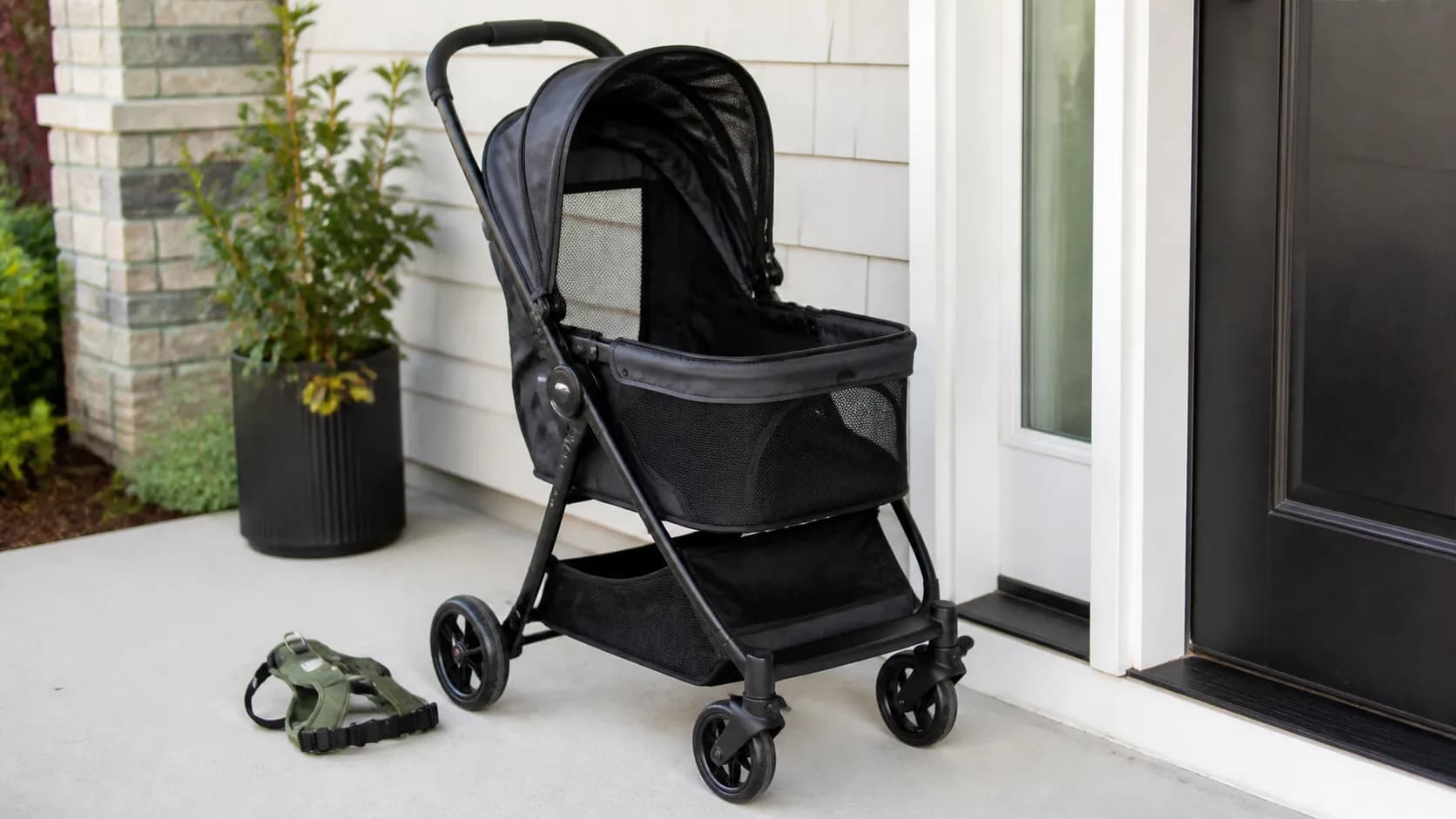
Start with the animal's body and reason for use
Measure natural body length, seated height, shoulder width, turning space, and current weight. Note heat tolerance, balance, vision, anxiety, ability to step in, and any recent change in walking. New pain, weakness, breathing difficulty, or exercise intolerance needs veterinary attention; a stroller should not hide an undiagnosed problem.
Match the cabin and entry
Compare usable interior dimensions rather than outside size. Check floor stiffness, padding, head clearance, ventilation with covers open and closed, entry height, zipper or latch path, and whether the pet can turn and lie naturally. Load and unload with brakes set, and support the animal as its condition requires.
Choose wheels for the complete route
Walk the planned path and note thresholds, elevator gaps, curb cuts, broken pavement, gravel, grass, slopes, rain, crowds, and transit rules. Small wheels save folded space but catch more easily. Confirm steering, wheel locks, parking brakes, handle height, tip behavior, visibility, and safe curb technique before a long outing.
Use only approved restraint points
Follow the manual for internal tether attachment and suitable harness use; do not clip to a collar in a way that can injure or entangle the pet. Keep the enclosure closed as instructed, hands on the stroller on slopes, and the animal supervised. A stroller is not a crash-tested vehicle restraint unless the exact product explicitly establishes that separate use.
Rehearse folding, storage, and cleaning
Practice removing the pet, setting brakes, folding, lifting, loading the vehicle, reopening, and checking locks without rushing. Measure the folded unit, cargo opening, stair carry, and caregiver lift. Clean liners, mesh, frame, and wheels according to the manual and stop using damaged tethers, latches, fabric, wheels, or brakes.